- Smart Manufacturing
- Digitization
Innovation through light: How F-theta lenses are opening up future markets with their performance
Light is much more than what your eyes can see. Light is energy that makes life possible. It shapes our everyday lives. In modern technology, light has taken on a special significance and is a key to innovation and progress. This is where F-theta lenses and objective lenses come into play as they are bringing about change in various industries.
The use of light to optimize processes is nothing new—yet rapid technological developments have significantly expanded the potential of this form of energy. Photonics has established itself as the driving force behind numerous modern innovations and plays a crucial role in areas such as communications, medical technology, and manufacturing.
One example of these developments is F-theta lenses and objective lenses and their impact on change in a large variety of industries.
What are F-theta lenses? How do F-theta objective lenses work?
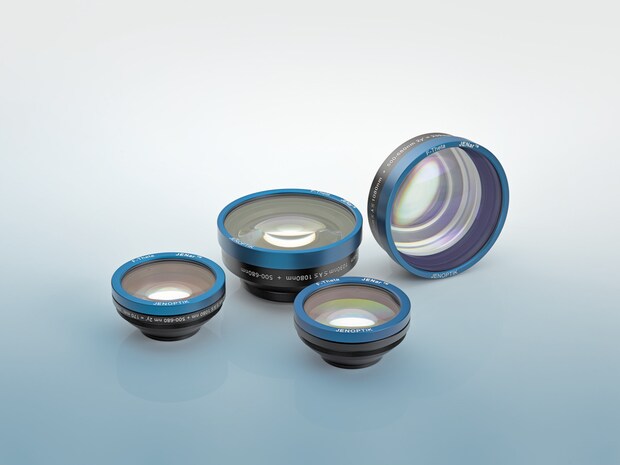
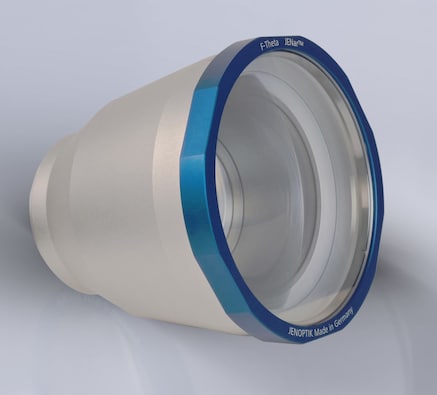
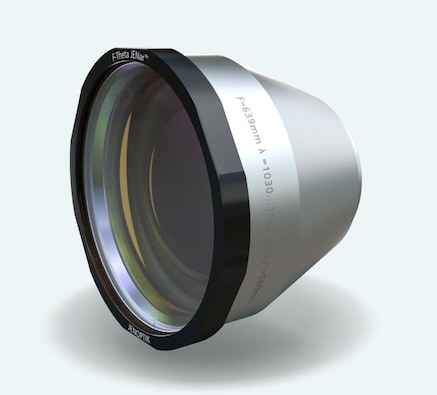
- F-theta lenses are special optical lenses used in laser systems to produce a uniform focus over a specific working field.
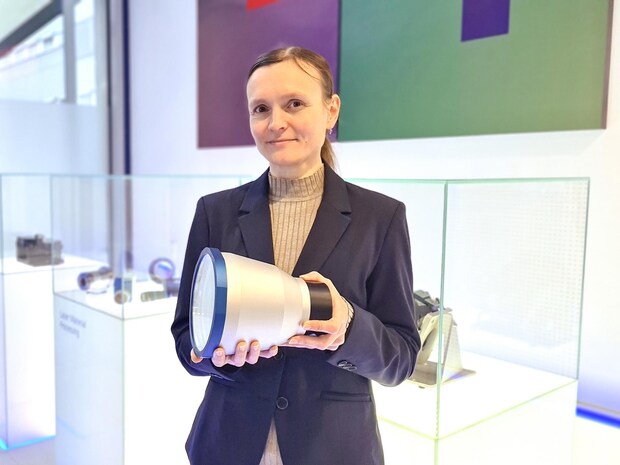
- F-theta objective lenses (also known as scan lenses or flat field lenses) consist of lens systems that are used in numerous scanning applications. They are integrated into the beam path behind the scan head and perform various functions.
The term "F-theta" refers to the fact that the angle (theta) of the light beam has a linear relationship to the focal length (f). This means that the position of the focused point is proportional to the angle. This enables precise and uniform processing across the entire working field.
In optics and in F-theta lenses and F-theta objectives, the "F" (focal length) is generally used. However, "Ƒ" may appear in some contexts or in certain languages as an alternative spelling for focal length, especially in mathematical or physical texts where formulas are presented. The use of "Ƒ" could also be due to typographical differences or regional spellings. However, in most technical and scientific documents, "f" (lowercase) is the common designation for focal length, with F capitalized for nouns such as "F-Theta lens." It is important to consider the context in which the terms are used.
F-theta lenses are the all-rounders in future markets
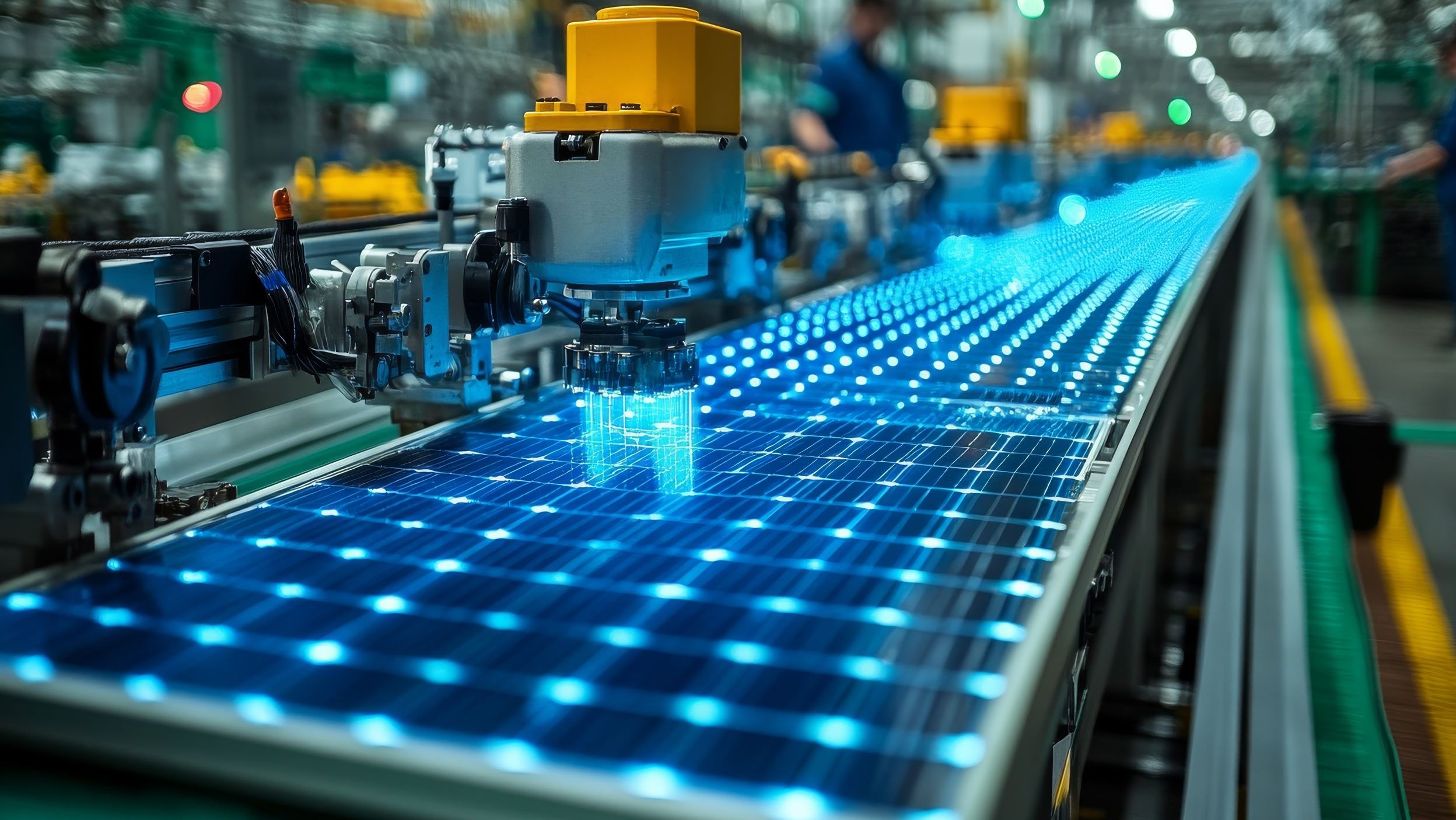
F-theta lenses are specially designed for laser processing and offer a wide range of advantages that make them play a crucial role in numerous markets. The following are particularly noteworthy:
Semiconductor equipment

Solar cell manufacturing
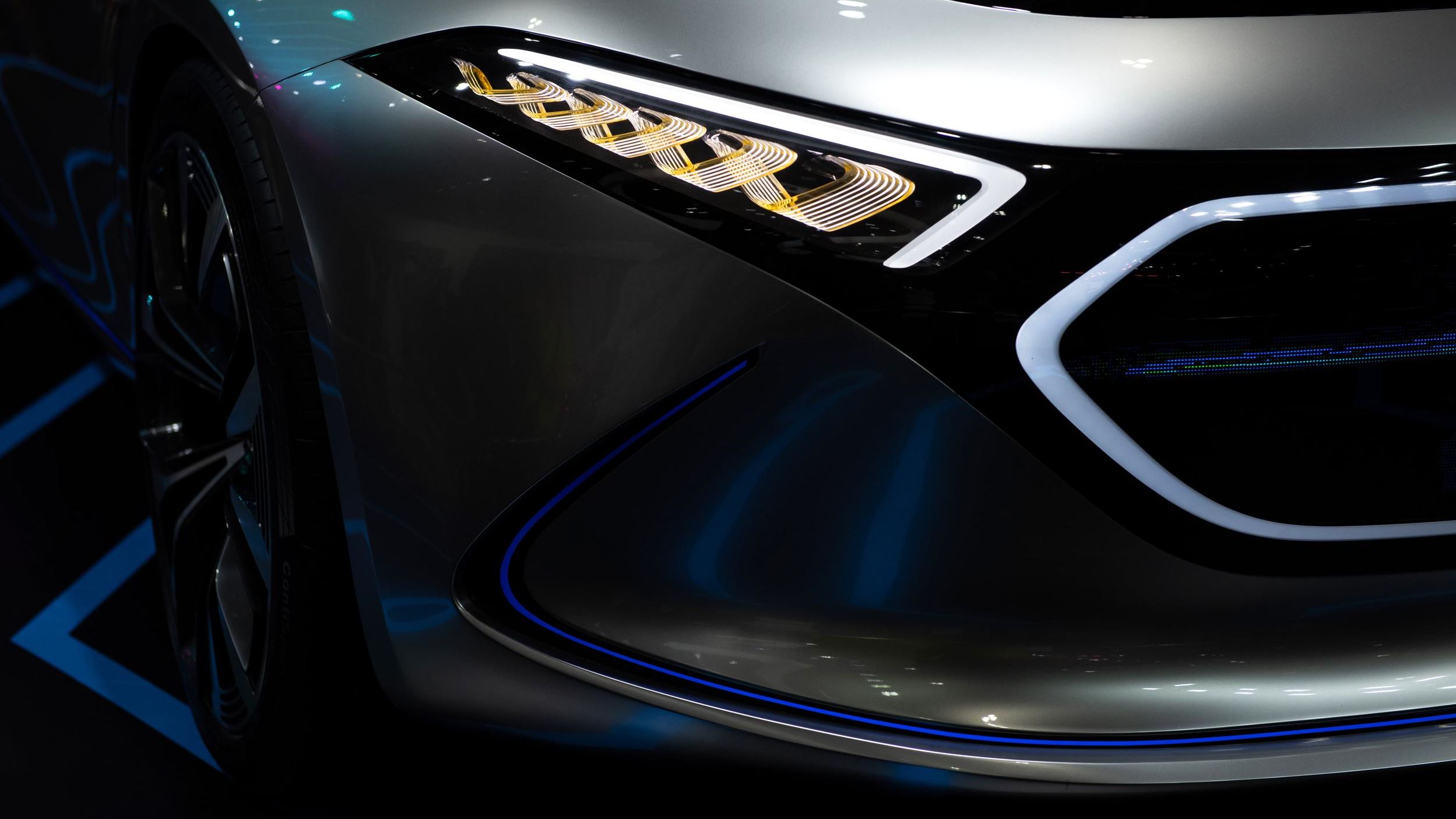
Automotive industry
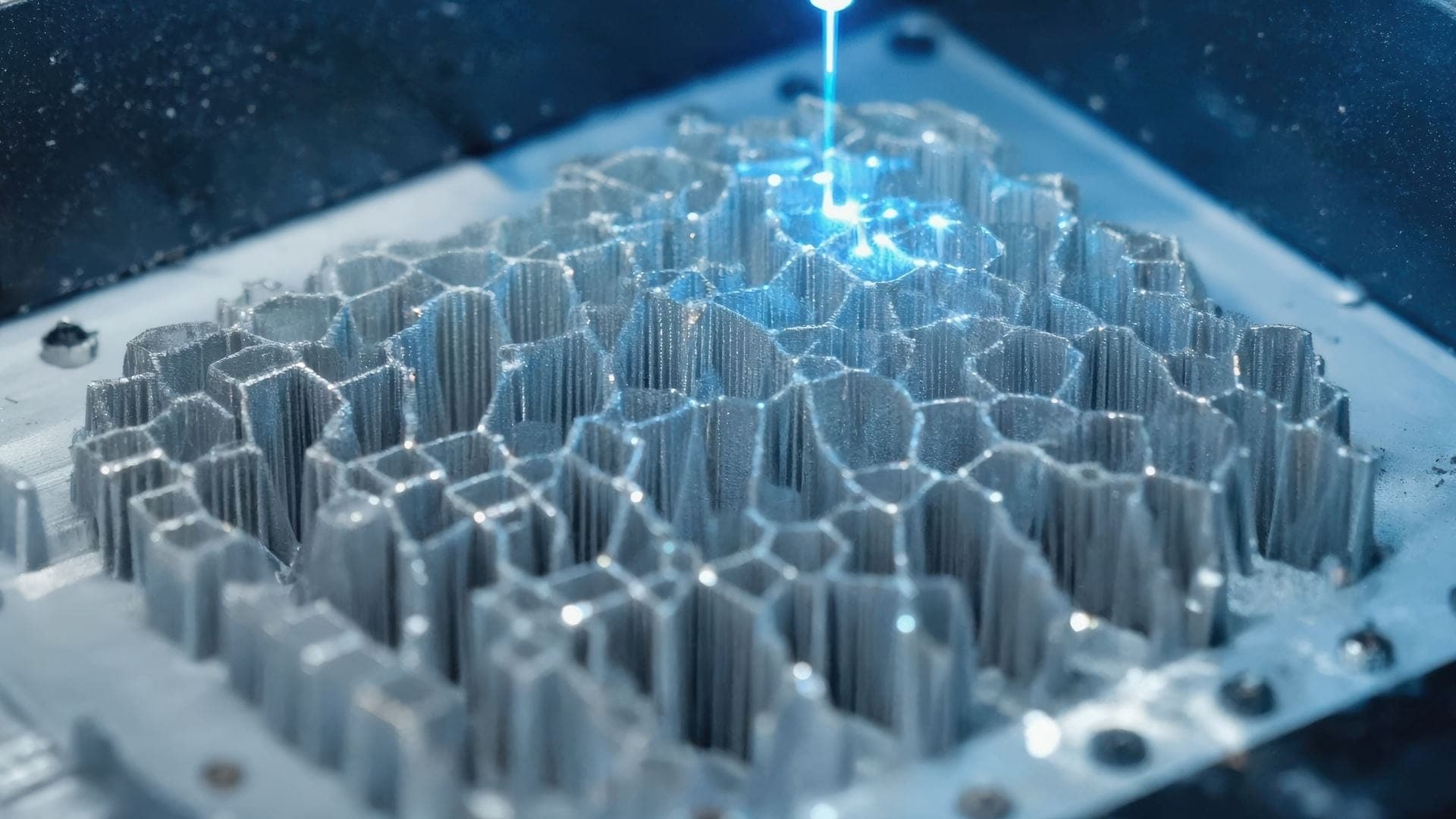
3D printing
Battery production

F-theta lenses in multiple product families
The wide range of possible applications requires different solutions. As a photonics group, Jenoptik offers innovative and high-quality products based on over 30 years of experience in photonics and laser technology.
The product diversity is reflected in specific application areas and laser types:
- For laser material processing with medium and high laser powers, we have developed the JENarTM F-theta lenses, which are available for wavelengths from 355 to 1080 nm.
- For applications with high-power and short-pulse lasers, our F-Theta JENarTM SilverlineTM all-quartz lenses are ideal, covering wavelengths from 266 to 1100 nm.
- The JENarTM APTAlineTM series complements the portfolio with a cost-effective solution for demanding applications with wavelengths from 355 to 1080 nm.
Selected advantages of the Jenoptik product lines for F-theta lenses
- Precision: Uniform focusing over large areas enables high detail accuracy.
- Efficiency: Shorter processing times increase production speed and reduce costs. In addition, FEM analyses of optical assemblies contribute to increased efficiency by taking both thermal and mechanical stress into account.
- Flexibility: They can be quickly integrated into existing systems.
- Versatility: F-theta lenses are suitable for various materials and are therefore ideal for a wide range of applications.
- Series/process stability: 100% testing ensures interchangeability in the field.
- Durability: Thanks to low-contamination mounting technologies and assembly in a certified clean room, the lenses have a long service life.
Excellence in laser material processing with F-theta lenses
With the doubling of F-theta production capacities at our sites, Jenoptik is a reliable partner for components and systems that impress with high product quality, technological excellence, and stable processes.
- Consistent product quality thanks to high quality standards: You can rely on the same high quality regardless of the production location.
- Global presence, local solutions: We respond flexibly to the growing demand for F-theta lenses and deliver directly to your location.
- Reliable partnership: As your system partner, we support you along the entire value chain – from the initial idea to implementation.
- Committed cooperation: Through close cooperation from product development to series production, we ensure that your requirements are optimally met.