High-precision refractive optical elements (ROEs): Unique micro-optical solutions from DUV to LWIR
From everyday vision correction to self-driving cars, Refractive Optical Elements control light with extreme precision, powering the technology that shapes our world.
ROEs for diverse functions
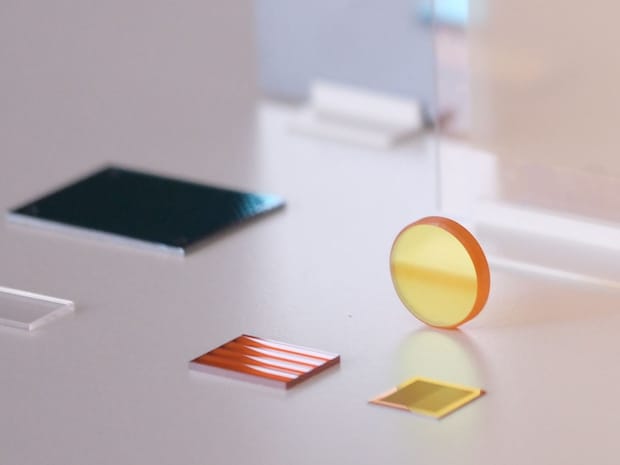
With our sophisticated Refractive Optical Elements, we can implement a multitude of functions with minimal light loss.
These include the following functions:
- Fiber and waveguide coupling, collimation and wavelength-selective switching
- Homogenization of light over a specific area
- Laser beam shaping for converting existing beam profiles into customer-specific intensity profiles
- Fill Factor Enhancement for telecentric and non-telecentric inputs making detector arrays more efficiency
- Shack Hartmann arrays for wavefront sensing
- Fill Factor Enhancement for telecentric and non-telecentric inputs making detector arrays more efficiency
- Shack Hartmann arrays for wavefront sensing
Material variety for every spectrum
The choice of material defines the application range of our ROEs:- Visible Light & UV: High-quality quartz and plastics for displays and standard optics, CaF2, AI2O3
- Specialized Wavelengths: Materials like Silicon (Si), CaF₂, Al₂O₃, ZnSe, and ZnS offer optimal transparency for specific IR and UV applications, GaP, Ge
This versatility allows us to cover the entire spectrum from DUV to LWIR with precision.
Design and manufacturing excellence for a broad micro-optics variety
Jenoptik designs and manufactures micro lens arrays using grayscale technology and nanostructuring – creating customized high-precision micro-optics with:
- greater uniformity and higher fill factors
- rectangular, square, cylindrical, hexagonal shapes
- flexible aspheric prescription
- material selection from DUV to LWIR
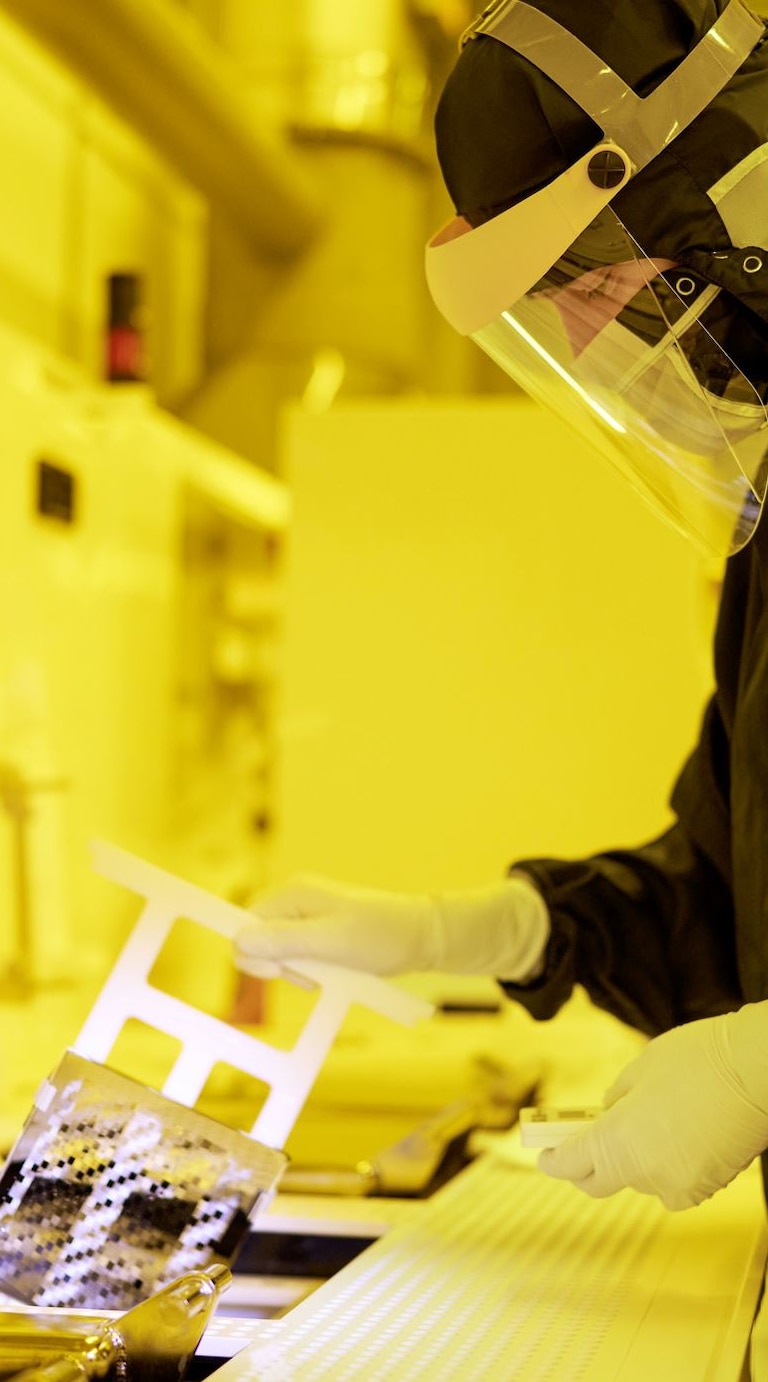
Refractive Optical Elements for advanced industrial and manufacturing applications
At Jenoptik, we go beyond simply bending light. We engineer ROEs to control light with nanometer-level precision, driving efficiency in your most critical processes. Our expertise lies in close collaboration with customers from the early stages of development.
- Semiconductor production: microoptics for lithography and inspection systems
- Optical data communication: fiber and waveguide couplers, collimators and wave-lenght-selective swithes
- Laser material processing: refractive optical elements in production facilities
- Lighting & energy: microoptics for modern lighting applications
- Medicine: laser eye and skin treatment
- Displays and projectors: light beam paths and micro-projectors
- Metrology: wavefront test bench and homogeneous lighting systems
- Infrared applications: LIDAR
Discover our product portfolio on Refractive Optical Elements (ROEs):
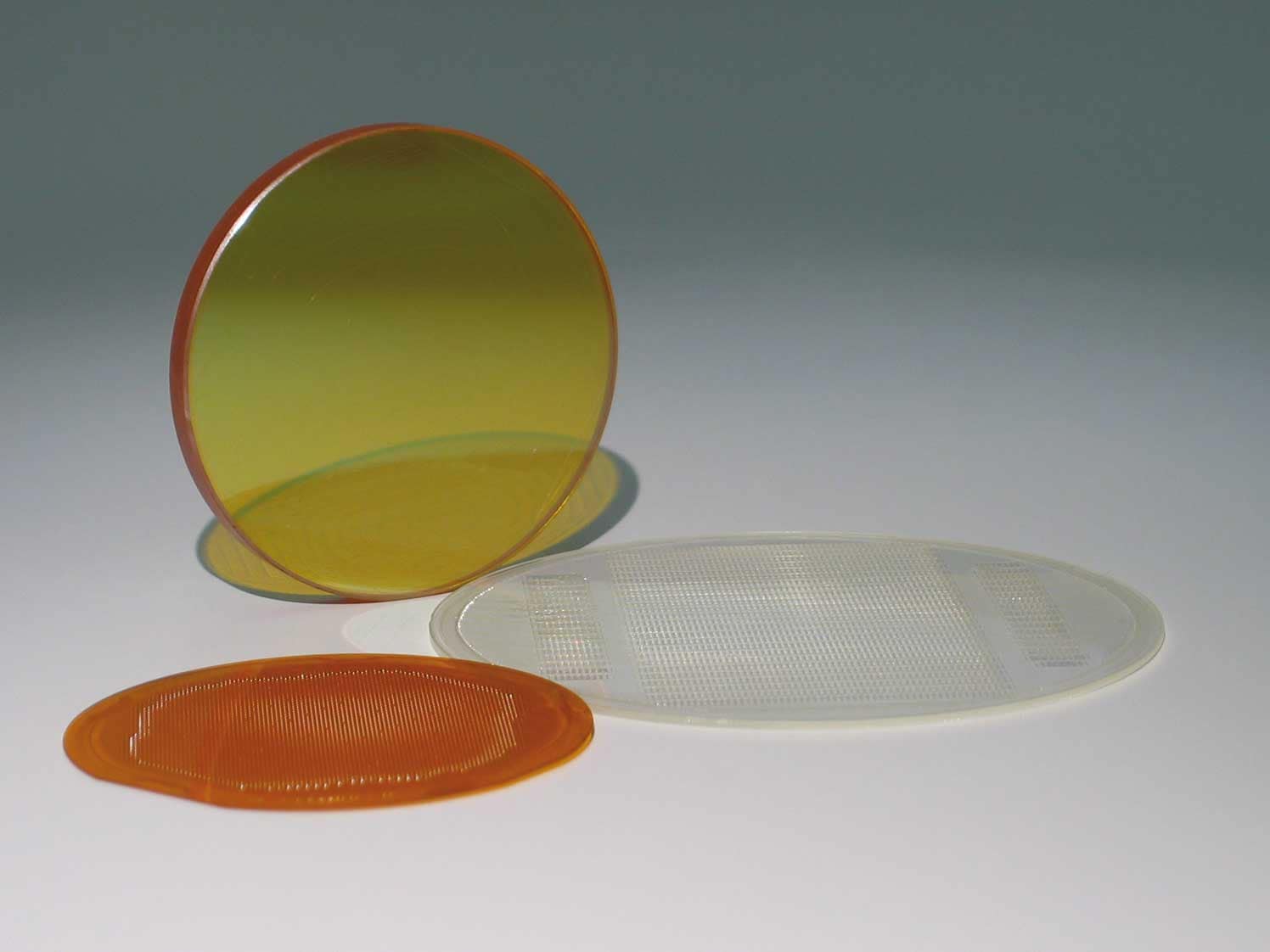
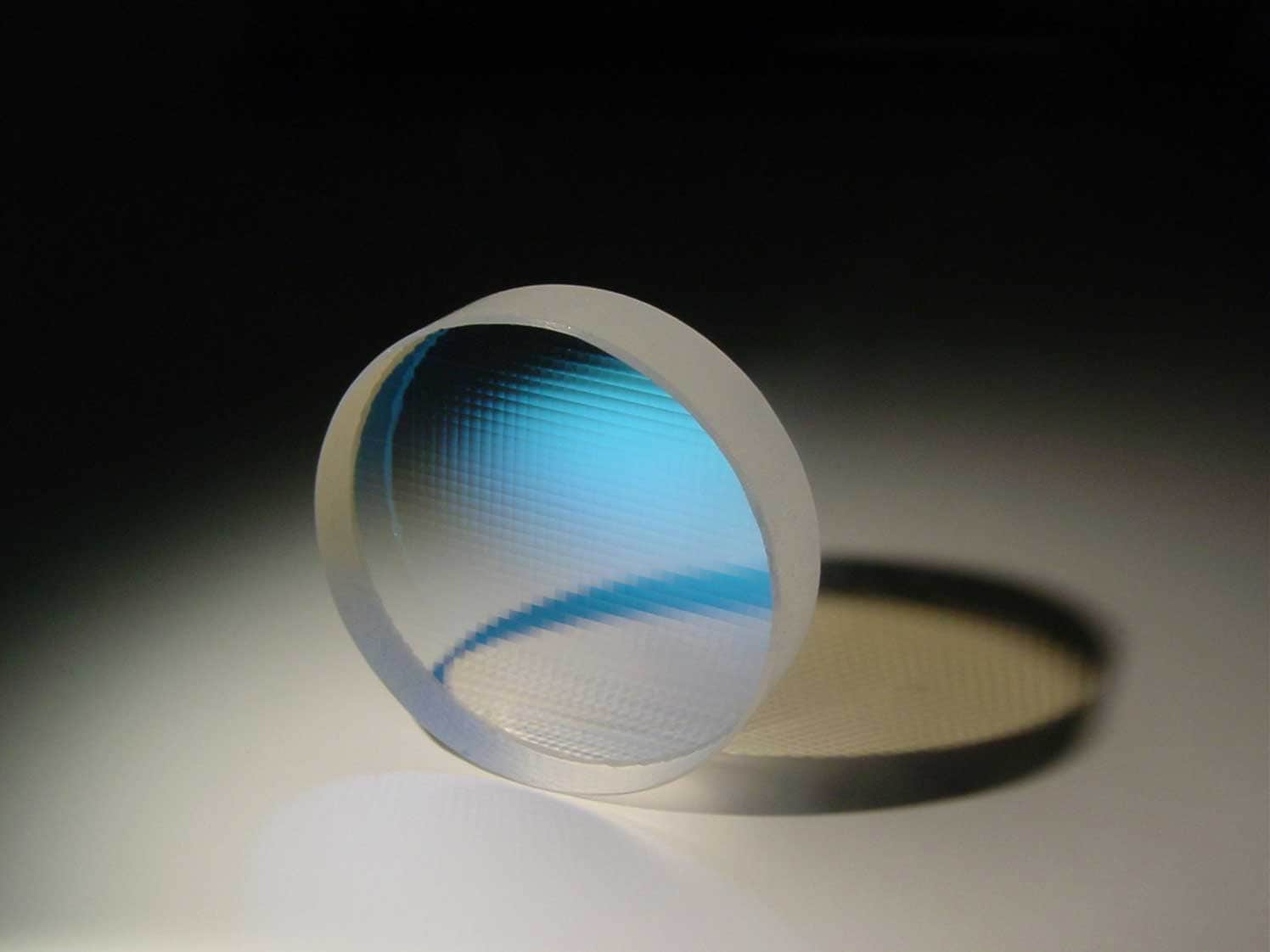
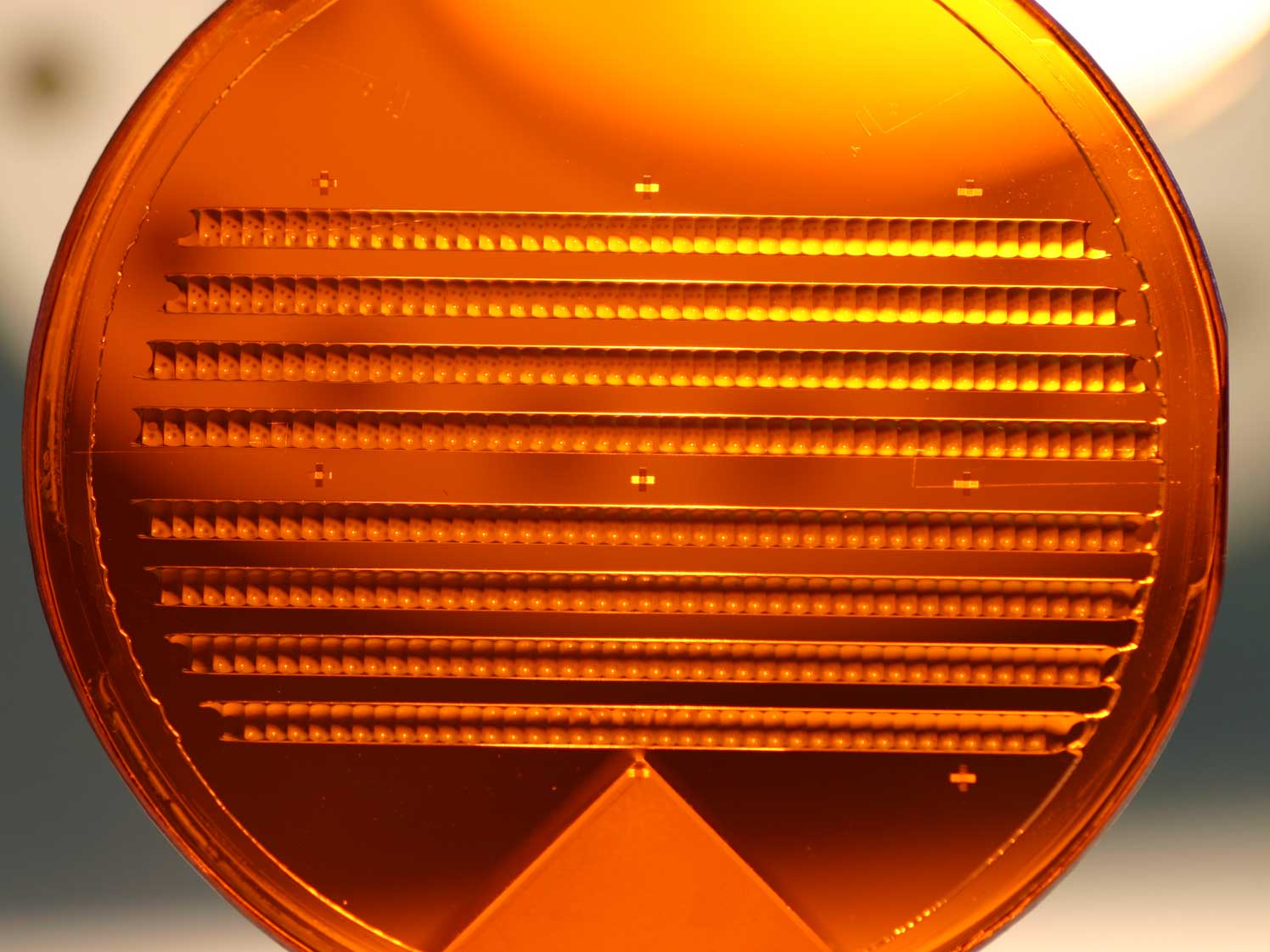
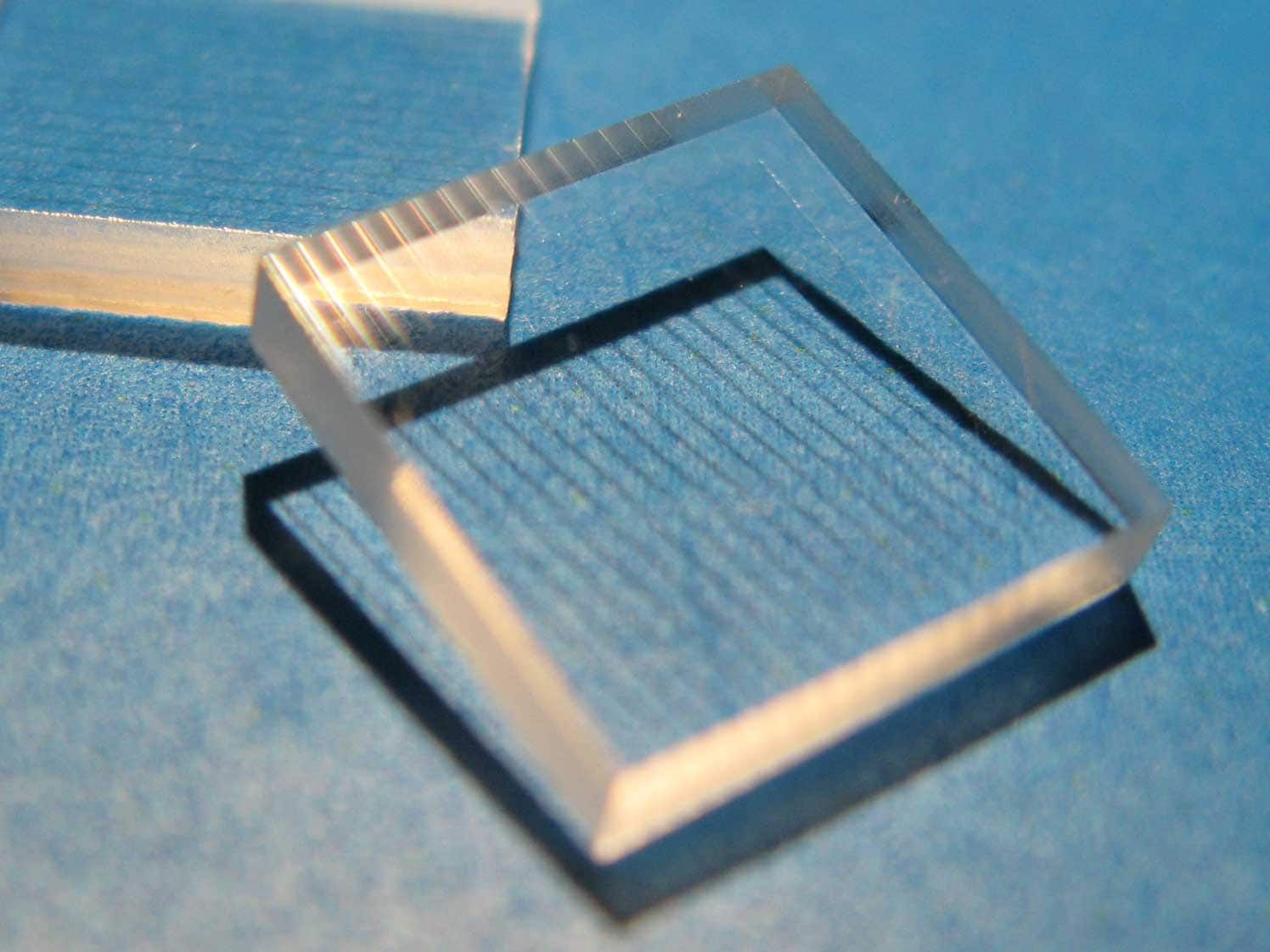
ROEs are the foundation of classical optics. Unlike Diffractive Optical Elements (DOEs), which steer light via diffraction, or reflective elements (mirrors), ROEs utilize the principle of refraction. This means the direction of light changes when it passes from one medium (e.g., air) into another with a different refractive index (e.g., glass or plastic).
ROEs can be categorized in several ways: by their geometry (shape), by their optical function, or by their manufacturing technology.
The primary categories of ROEs are lenses, which modulate light propagation through convergence or divergence, and prisms, which steer light, and provide angular dispersion.
Typical lenses are:
- Lens-like: spheres, aspheres, cylinders and beam shapers
- Prism-like: refractive axicon
- MLAs (Micro Lens Arrays) systemic and randomized
- Neutral density filter and interference filter
- Focusing (bundling): Collecting parallel light into a single point (the focal point).
- Collimating (parallelizing): Converting divergent light (from a point source) into parallel light.
- Imaging: Creating a real or virtual image of an object (magnification/minification).
- Beam shaping: Changing the intensity distribution of the beam (e.g., from a Gaussian profile to a flat "top-hat" profile or a line).
- Fiber coupling is a critical and distinct function of refractive optical elements (ROEs), even though it is technically a specific application of focusing and beam shaping.
Foundry Services
Lithography
- E-Beam, projection and contact lithography
- Front to back alignment capability
- Substrate sizes: 2”-7”, 0.2 mm to 6.35 mm thickness
- Grayscale patterning
Etching
- Plasma etching
- Wet etching
- Wafer level bonding
- Optical contacting thin film deposition
- ARC, thermal oxide
Fiber coupling is the process of efficiently transferring light from a source (like a laser diode, LED, or another optical fiber) into the core of an optical fiber. The goal is to maximize the amount of light that enters the fiber and stays trapped inside it (via total internal reflection).
Why is it a special function?
- Small acceptance angle (NA): Optical fibers only accept light that enters within a specific cone angle (defined by the NA). If the light enters at a steeper angle, it escapes the fiber.
- Small core size: Fiber cores are tiny (often 2–100 µm for single-mode/multi-mode fibers). The optical element must focus the beam to a very precise spot size.
- High precision required: Misalignment by a few micrometers can cause significant signal loss.
1. Collimating lenses (at the source)
- Function: Laser diodes and LEDs emit light in a highly divergent, often elliptical pattern.
- ROE role: A small aspheric lens or GRIN lens is placed close to the source to collimate (parallelize) the light. This makes the beam easier to handle and focus.
Standard spherical lenses would introduce aberrations that make it impossible to focus the light tightly enough into the small fiber core.
2. Focusing lenses (at the fiber input)
- Function: Taking the collimated beam and focusing it into the fiber core.
- ROE role: A high-NA (Numerical Aperture) lens focuses the beam to a spot size that matches the fiber core diameter.
- Why high NA? To capture as much light as possible and ensure the focused beam fits within the fiber’s acceptance angle.
- Function: Many laser diodes emit an elliptical beam (e.g., 10 µm x 100 µm), but fiber cores are circular.
- ROE role: Cylindrical lenses or anamorphic prism pairs are used to reshape the elliptical beam into a circular one before it enters the focusing lens.
- Why? To maximize coupling efficiency. If you try to focus an ellipse into a circle, you lose a lot of light.
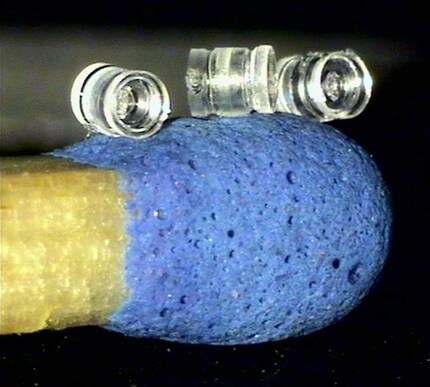
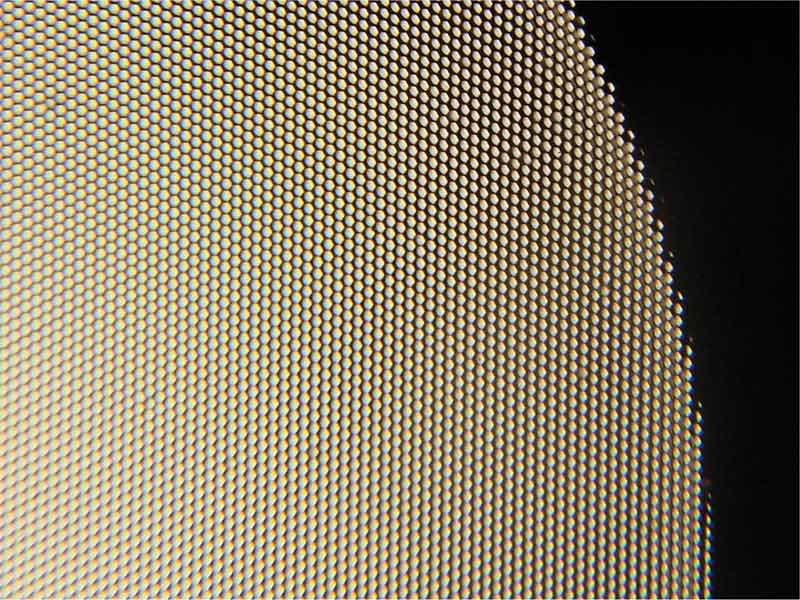
Micro lens arrays are primarily used for applications requiring a high degree of alignment accuracy in a small space.
Jenoptik designs and manufactures micro lens arrays using grayscale technology. This allows us to achieve greater uniformity and higher fill factors than would otherwise be possible with other technologized, such as reflow technology. The aperture of the single lenses can be rectangular, square, hexagonal, round or elliptical, while the very flexible lens profiles. Custom configurations are also possible for larger lens spacing.With spherical, aspherical and off-axis lenses and lens segments, we guarantee absolute positioning accuracy of less than 0.25 micrometers relative to the ideal position. The MLAs can be aligned front to back to within 1 micron, thus allowing us to create monolithic double-sided micro lens arrays. This gives rise to even greater functionality within a smaller space.
Features
- Increases signal to noise ratio
- Increases sensitivity
- For back illumination
- GaP designs available
- Thin lens designs & aspheric designs
Applications
- LCD based projectors
- Backlight homogenizers
- 3D displays
- Compound eyes
- CCD and CMOS arrays
- IR focal plane arrays
- Bolometers
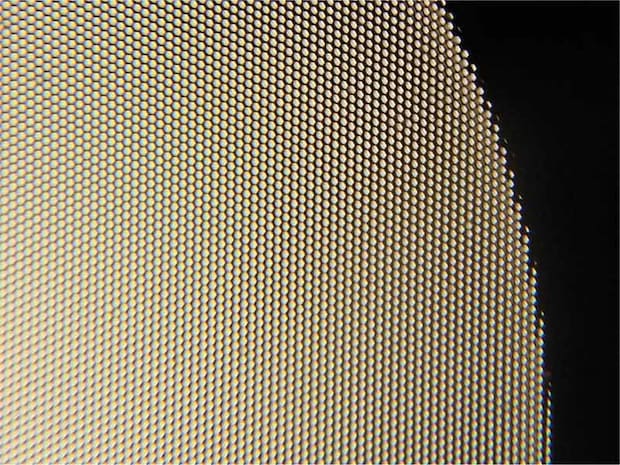
Refractive homogenizers: controlled shaping of laser beams with uniform power
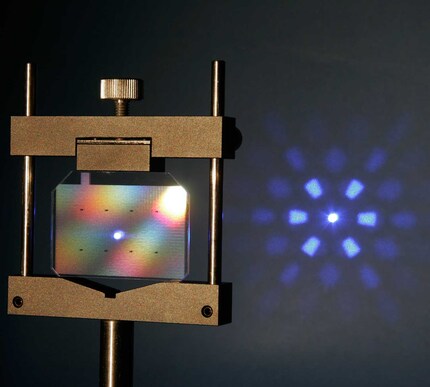
A large number of laser applications require accurately controlled light distribution with uniform intensity in specific regions. This can be achieved using either diffractive or refractive homogenizers.
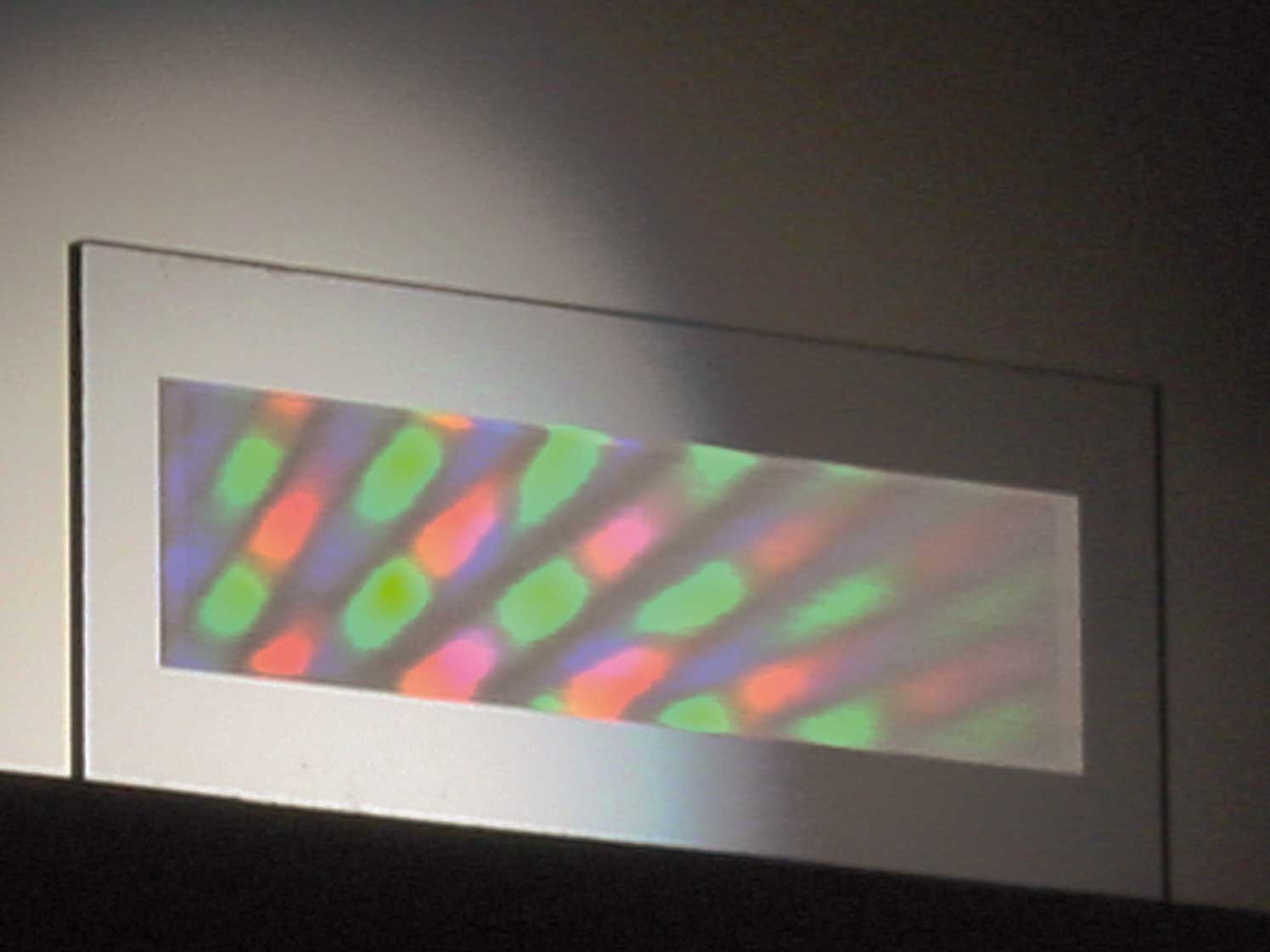
Jenoptik makes refractive homogenizers using micro lens arrays that mix and combine an input an inhomogeneous light beam into a well-controlled and uniform intensity. Our refractive homogenizers can be used with inputs that are single mode, multimode, monochromatic or broadband in nature. This allows you to create virtually any beam shape to ensure exact and homogeneous illumination.
Refractive homogenizers are ideal for laser applications that require the laser beam to maintain a controlled shape. This makes them ideal for skin treatments, laser material processing and surgical procedures involving lasers. The refractive optical elements can also be used in areas such as communication, industrial image processing, for target systems as well as for marking and printing.
The optical elements can achieve 3 to 5% uniformity and can generate round, square or other intensity distributions. The main advantage of refractive homogenizers over diffractive diffusers is that they can be used across a wider wavelength range with very low zero order. It is thus possible to create different ROEs which, when combined, cover the entire range from DUV to LWIR.
Features
- High uniformity
- High efficiency
- Broadband designs available
- Extended source
- Double side design available
Applications
- Mask illumination & laser lithography
- Laser material processing, e.g. welding, cutting, scribing, soldering, drilling
- Laser sensors
- Communications
- Targeting systems
- Marking, printing
- Machine vision
Microlens arrays for fiber coupling and collimation for ICT
In Information and Communications Technologies (ICT), efficient light transfer between fibers, waveguides, and lasers is critical for system performance. Microlens arrays have become essential in this landscape, enhancing light coupling efficiency and spatial resolution to enable high-performance fiber transmission.
Discover Jenoptik’s micro-optics portfolio, designed to ensure nanometer-precision coupling between laser sources and optical fibers. Our solutions minimize signal loss and back reflections while maximizing bandwidth. For demanding multi-fiber array (MFA) applications, we provide specialized aspheric microlens arrays that maintain consistent beam quality across multiple channels simultaneously.
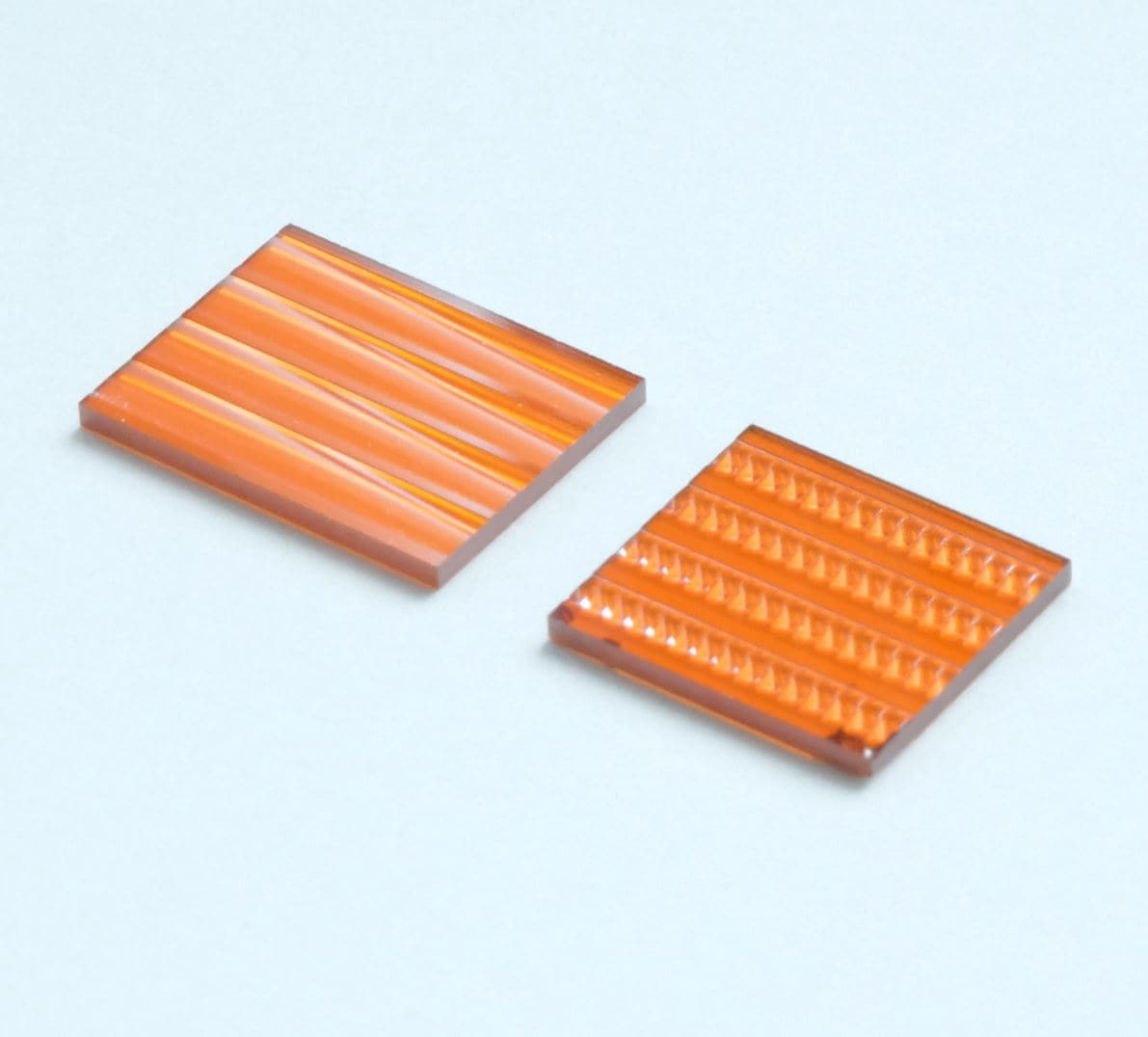
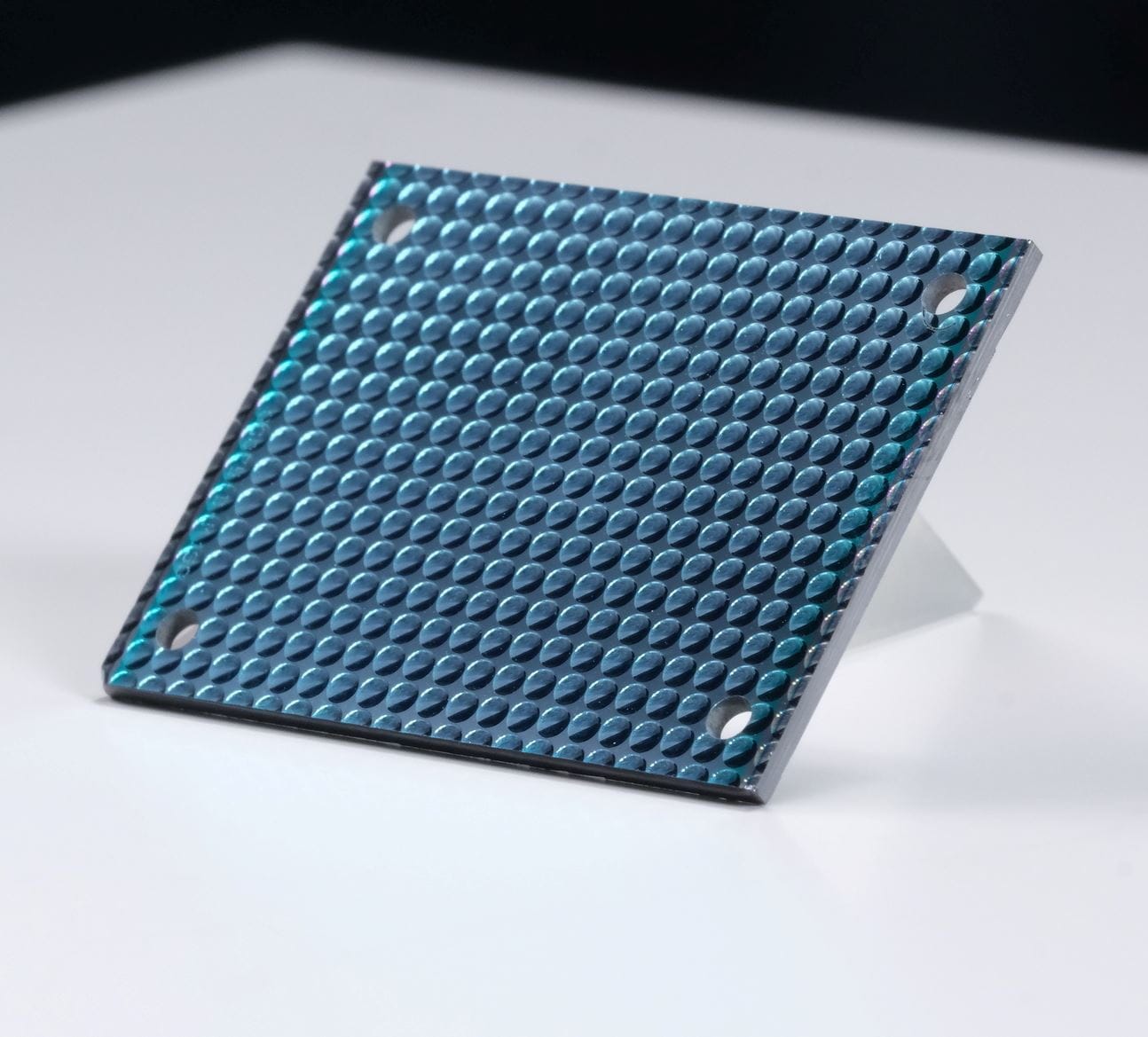
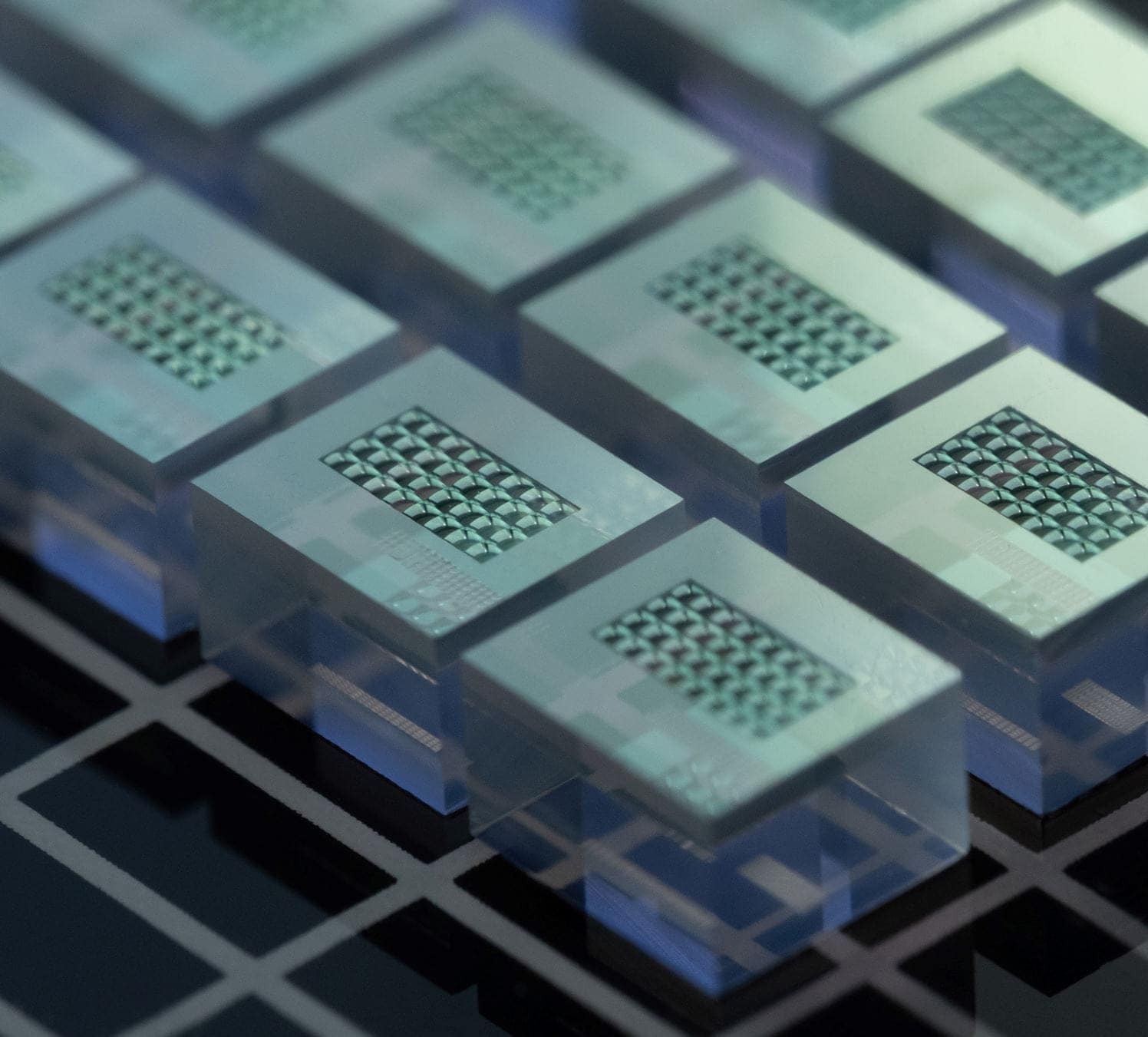
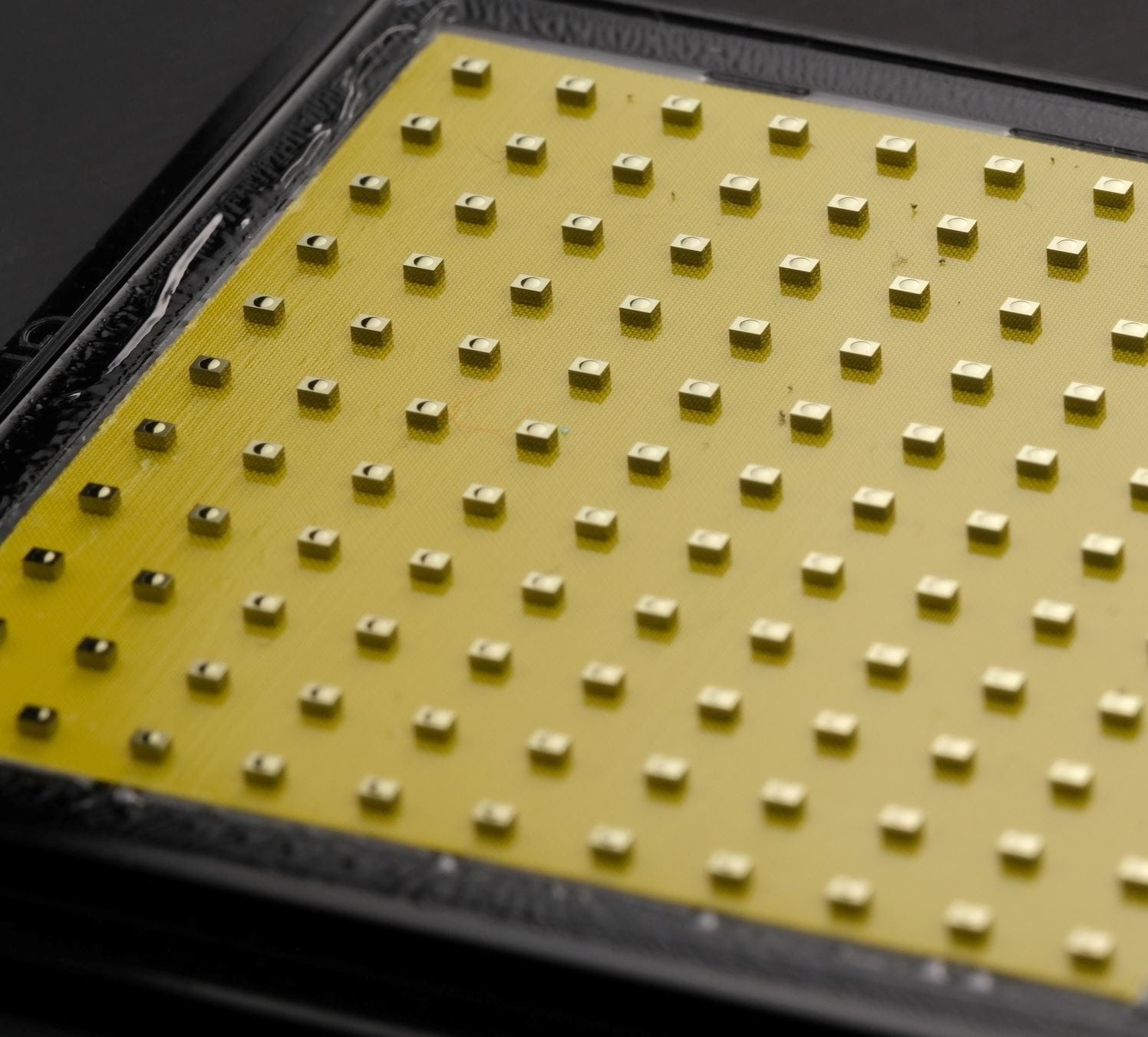
Tailored microlenses & arrays for next-gen optical data communication
Unlock the full potential of high-speed connectivity with Jenoptik’s custom micro-optical solutions. We
deliver high-precision, reliable components engineered to meet the rigorous demands of modern data
centers and communication infrastructure.
Optimized for Key Applications:
- Pluggable Optical Transceivers
- Wavelength-Selective & Optical Circuit Switching (WSS/OCS)
- Co-Packaged Optics (CPO) & Near-Packaged Optics (NPO)
- External Laser Small Form Pluggable (ELSFP)
- Fiber connectors